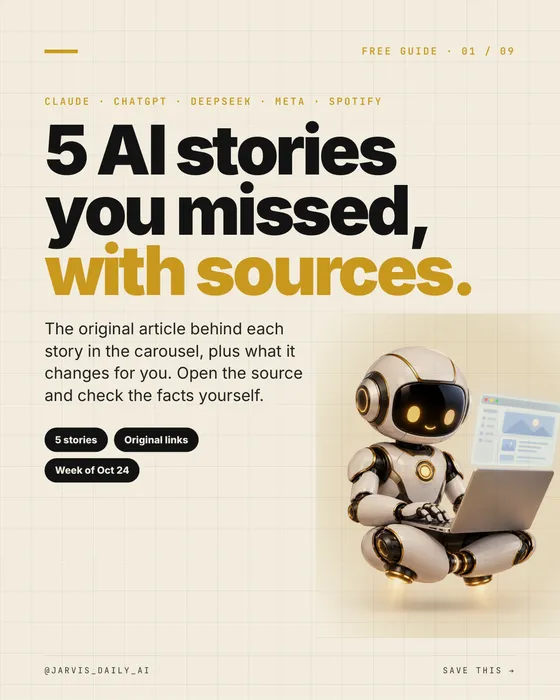
Weekly AI Links Sheet
Five stories. Five sources. No tab hunting.
You get this PDF right away, plus one email a week with the new guide. Unsubscribe in one click. Privacy
The problem
AI news moves fast and the headlines drop the caveats. By the time you find the original article, you have read three summaries of a summary.
After this guide
You get the original link for every story in one sheet, with what it changes for you and what is still unverified. You can check each claim in a minute before you repost it.
What's inside
- The original article behind each of the five stories
- What each story changes for you, in plain words
- Which numbers are the company's own claim
- Three questions to check any AI headline
Free preview
The Weekly AI Links Sheet lists five AI news stories from the week of Oct 24, 2026. Each one links to the original article and says what the story changes for you. It is for anyone who wants to check AI headlines against the source before sharing them.
- Claude marks its textText from new Claude models carries a hidden pattern that can suggest Claude was involved, but it cannot prove who wrote the text. A full rewrite removes it, so treat a detector result as a hint, never as proof.
- ChatGPT can lock chatsA chat locked with a 4-digit PIN disappears from your history. It is not end-to-end encrypted, and resetting the PIN deletes the locked chats.
- DeepSeek is out of federal systemsCivilian federal agencies must remove DeepSeek and tools built on it. The Pentagon is not covered, so if you work for a federal client, check your stack before you deliver anything.
- Meta paused Muse sharingShared Muse chat links could be found through public DNS records. Keep private details out of any shared AI chat, on any service.
- Spotify hid 50M AI tracks50M+ AI and spam tracks are out of recommendations this year, but they are still on the service. The number is Spotify's own, not independently verified.
A prompt from the guide
Here is an AI news link: [URL]. Read the original source. Tell me what is confirmed, what is the company's own claim, what is still unknown, and one thing I should do differently.
The full guide has every step, all the prompts and the fixes for what usually goes wrong.
Questions
Can I tell if text was written by Claude?
Text from new Claude models carries a hidden pattern, so a detector can estimate that Claude was involved. It cannot prove who wrote the text, and a full rewrite removes the pattern. Treat a detector result as a hint, never as proof.
Is ChatGPT's locked chat feature secure?
You lock a chat with a 4-digit PIN and it disappears from your history. It is not end-to-end encrypted, and resetting the PIN deletes the locked chats. Do not lock the only copy of something you need.
Does the DeepSeek ban cover the Pentagon?
No. Civilian federal agencies must remove DeepSeek and tools built on it, but the Pentagon is not covered. If you work for a federal client, check your stack before you deliver anything.
Is it safe to share an AI chat link?
Meta paused Muse sharing because shared chat links could be found through public DNS records. The guide says to keep private details out of any shared AI chat, on any service, because a share link is a public page.
How do I check an AI headline before sharing it?
Ask three questions: who said it, whose number is it, and what changes for me. Find the company or outlet that first published the story, remember that a company's own figure is a claim rather than a measurement, and skip the story if you cannot name one thing you would do differently.
From the blog
- Open-Source Grok Bot Alternative: Install OpenMausBot Free
- Kimi K3.1 Pro: Near-Opus Coding at Half the Price (and the Catch)
More free guides
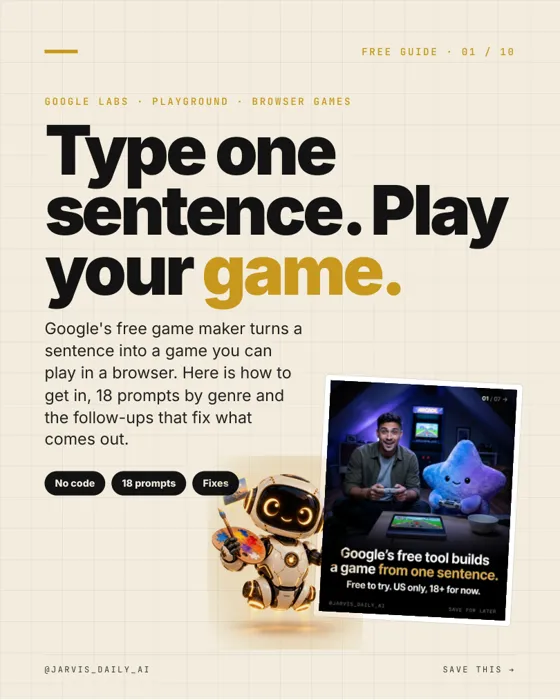 Game From One Sentence
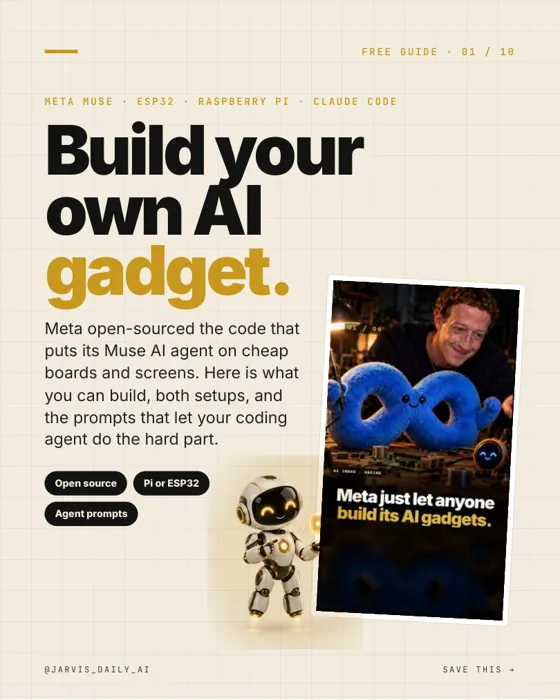 Build Your Own AI Gadget
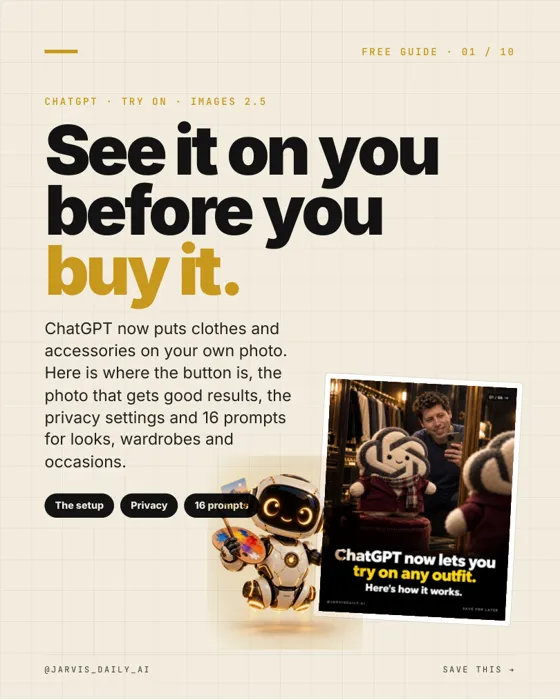 Try It On Before You Buy
 The 8 Free Clones Cheat Sheet
 3 AI agents racing to be your personal AI
 Dots, Muse and Grok Bot look alike. They do three different jobs.